

Saj Shapiro, CEO
Kirstie Boyle, CEO

Chris Bourassa, President & CEO
We’ll discuss the team issues you wish to resolve and use your own EQ profile to diagnose those you may not be aware of.

We then build a customer workshop using proven principles of EQ and organizational psychology guaranteed to resolve the issues.
One of our expert facilitators will run an interactive and engaging live facilitation (3 hours) ensuring everyone learns what they need to.
Then, 30 days of push notifications - tailored to each learner’s Cognitive Colour - sends tasks and tips to turn learning into habit.
Elevated EQ is proven to reduces stress, foster resilience, and boost overall mental health.

Enhanced EQ has been proven to decrease turnover, reduce absenteeism, and elevate overall productivity.

High-EQ teams have stronger communication, deeper trust, and mitigate unproductive conflicts.

All of our EQ-based training is recognized by all major professional designations as verified hours.
Full Workshop & 30 Day Support
One-Time Fee
1-on-1 Micro-Coaching
For 5 Credits
The Core Components fall into two categories: Individual and Environmental.
Individual: every CultureSprint is built using CultureSmith’s trusted WorkplaceEQ System. This is often referred to by our clients as, "The Colours." WorkplaceEQ adapts familiar behaviour models used in psychometrics like DiSC and Insights, expanding them to cover emotions and team norms. It uniquely forms a shared language around Self-Awareness (knowing one's 'Colour Profile'), Self-Regulation (understanding the emotional impact on behaviours), Empathy (grasping other 'Colours' to interact well), and Accountability (shifting from individual to team identity). The interaction of a person’s “Colour Profile” their current emotional state, and degree of alignment with team norms shape all workplace behaviour.
Environmental: Our expertise in organizational psychology allows us to apply these Individual Elements to the nine most enduring foundational issues in work teams: misalignment, lack of psychological safety, belonging issues, low trust, ineffective conflict, blame culture, motivation issues, power struggles and poor communication.
By applying Individual traits to the Environmental situations that activate them in undesired ways, we offer broad customization for any team while using proven, evidence-based practices to solve any issues.
Here again, having both individual and environmental components pays dividends:
Individual: People will know their 'Colour Profile,' promoting self-awareness. Understanding one's emotional responses and behaviors is key in a digital workspace. It aids self-regulation, helping people adapt to remote interactions.
Communication improves as empathy grows. Teammates learn each other's "Colour Profiles," enhancing communication and collaboration whether in-person or online. Lastly, accountability encourages the transition from an individual to a team identity, vital for remote work.
Environmental: Misalignment and communication barriers are common environmental challenges for remote teams. We help teams tailor their communication strategies based on individual characteristics, aligned with the desired organizational culture, and reduce the isolation associated with remote communication.
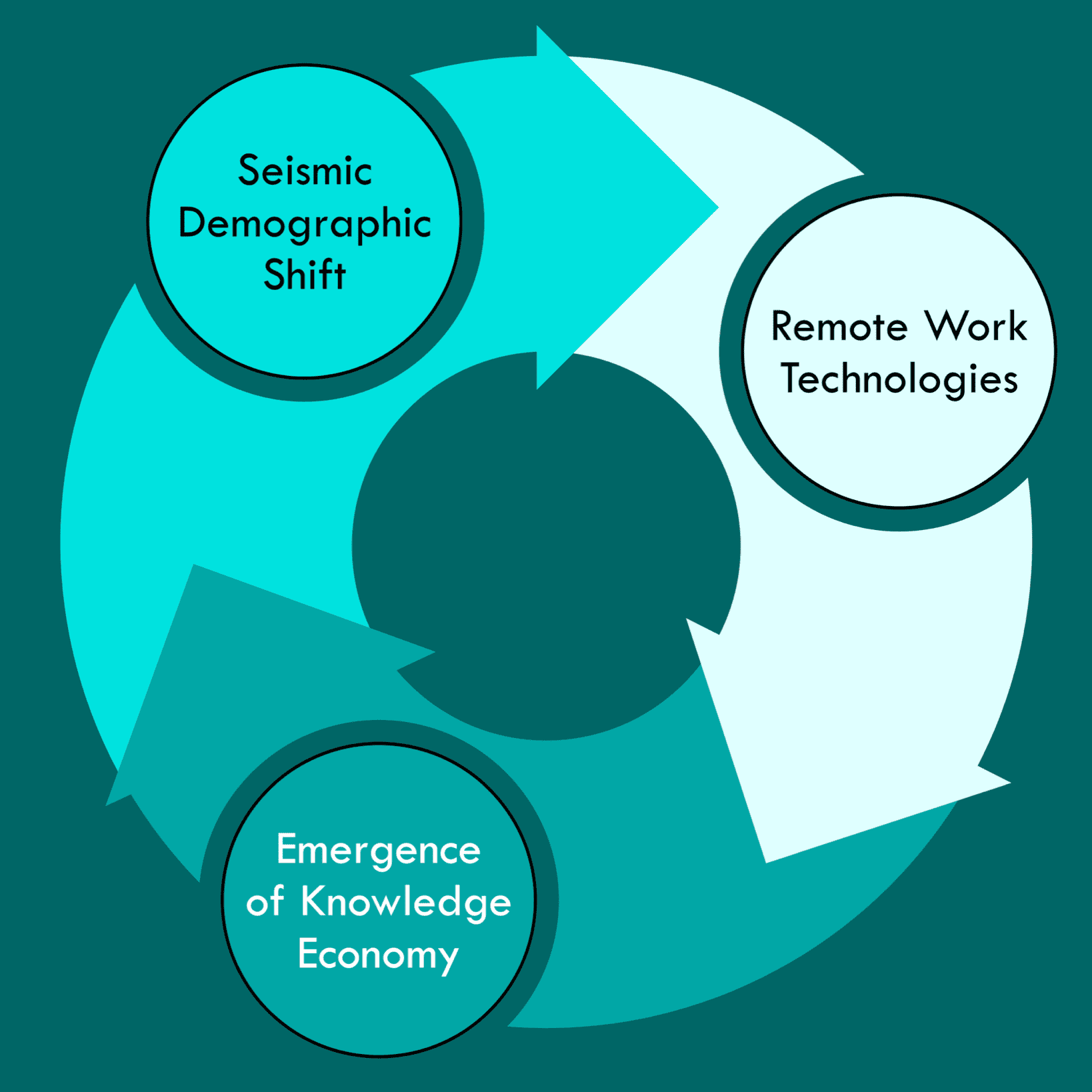
It is crucial to understand: Culture is the shared beliefs and behaviours of an organization - climate is the daily atmosphere. Organizational culture MUST be maintained by leaders in this new remote work era.
You have fewer opportunities to influence people when you are no longer physically next to them. Boosting EQ - yours and theirs - is the only way to get the most out of the interactions you now have.
We feel getting EQ-training from experts in organizational culture is therefore a no-brainer.
Yes and no. Or more like no and yes.
Again, the core of our ‘Colours” is built off the same Jungian framework as all major psychometrics most commonly used in the workplace. Therefore the “grammar” remains the same, allowing teams who’ve used other platforms to embrace our model with very little friction or difficulty.
However, by extending it beyond individual traits to emotion and team norms, people earn a much broader understanding of why they act as they do, why they should change for the team and how to do it.
Plus, we have taken painstaking efforts to remove the jargon and replace it with common words.
Instead of ‘learning a new language’ we make you fluent in the universal language of emotion.
In fact the most enduring feedback we get is allowing the lines of, “I’ve done so many personality tests before - this is the first one I’ve understood how to use.”
The most common thing we heard when we entered this space in 2014 was “We’ve run workshops like this before. They’re great. Then, nothing happens after them.”
It’s not that people are forgetful. What is commonly called ‘memory’ should be called ‘recall’. We all bring in roughly a terabyte of new data each day. The brain needs to decide what to do with it all. People do learn in sessions like this. However, they then take in a terabyte of new dat the next day, often forcing what they’ve learned into the margins.
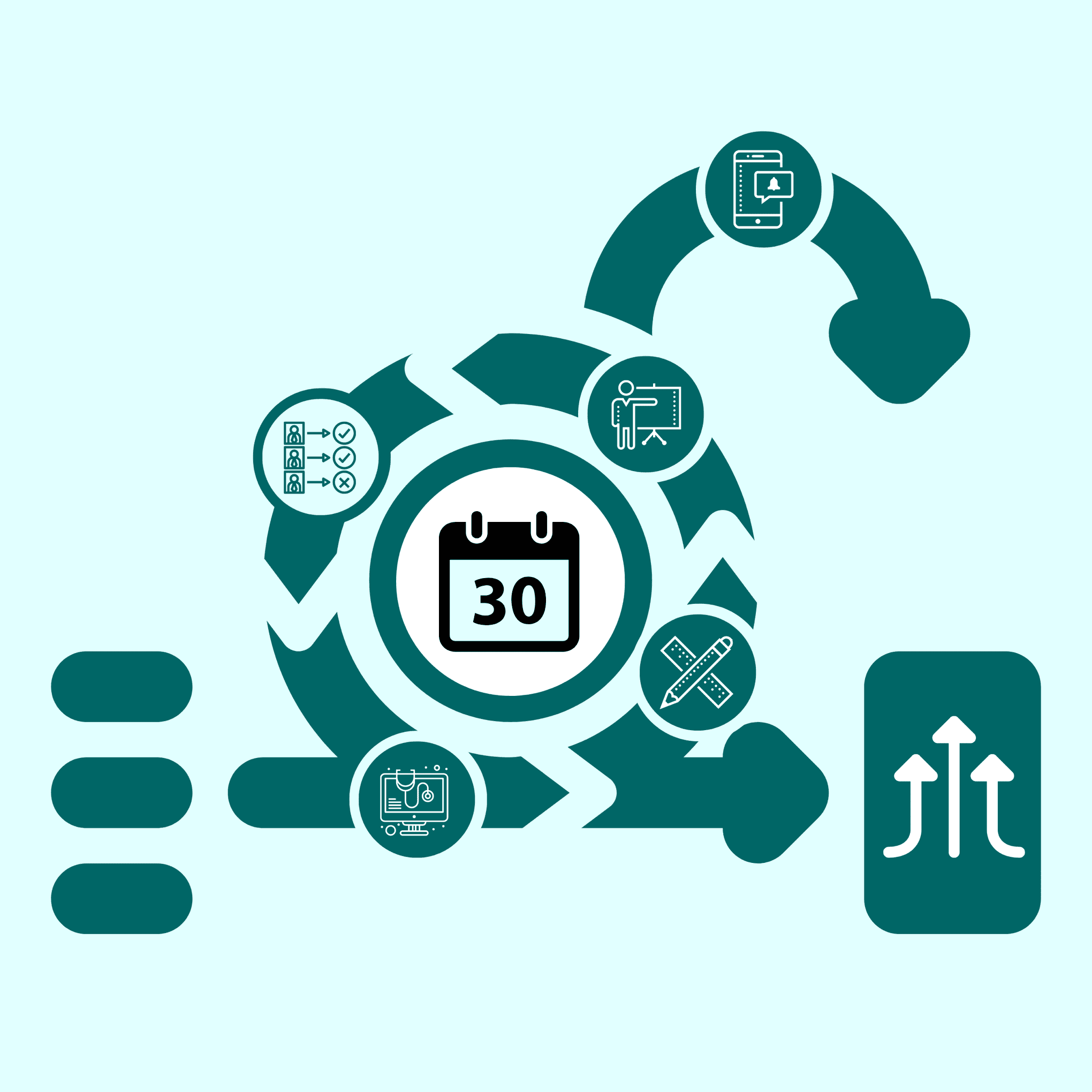
The groundbreaking "3&30" model was designed to combat this by focusing on the two things that tell the brain to hold-on to information: Relevance and Repetition.
The 3-hour expert-led workshop establishes Relevance. Each concept is made to MATTER to those in the room. The 30-day push notification cycle - tailored to each person’s “Colour” - offers the Repetition needed to turn what’s learned into behaviours. Enough repetitions and behaviours become habits.
Think of habits as the brain’s way of “compressing a file”. It automates the behaviour, taking up less cognitive space, allowing for even more learning to make its way in.
This why so many clients come back to us for multiple sprints - not because the first one didn’t work - but because it opened up the capacity to tackle even bigger challenges.
Disengagement and low-EQ don't all appear on one itemized invoice while training expenses do. This makes dollar-for-dollar comparisons difficult.
We can say Gallup projects the cost of disengaged employees to be 34% of their salary. The average national salary is $65k, placing disengagement costs at $22,100 per person. Gallup says 71% of employees are disengaged.
A 70% disengaged 5-person team represents $77K in risk, which we can solve for less than $6,000. Double the team size,you double the benefit, yet our costs remain the same. But ROI isn't our success metric. How many people are you sending home as the best possible version of themselves? That is how we measure ourselves.
There will be monetary benefits. Sizeable ones. However, in cases where this is the primary motivation for the work, we quickly become philosophically misaligned. To avoid this, we only work with leaders whose interest in our work is solely the emotional betterment of the people in their care. If that is you, you will find no better provider than us.